
Software Implementation Planning 101: Get the Most out of Your Software



The implementation of new software for enterprises is a long roller coaster ride that requires a lot of resources and material costs. Undoubtedly, you can nail down the programming part, but if you are stuck at implementation, you will be left hanging upside down without the ability to move on. A well-organized implementation process will provide accelerated growth and financial savings for a company, as well as improve the efficiency of all processes. On the other hand, a convoluted implementation process will lead to loss of income and downtime. If you want the implementation process to go as smoothly as possible, develop a software implementation plan.
Did you know that on average, companies that invest in software development report revenue growth of 20%. But investing and developing are only the first steps. Implementing the software correctly determines your organization’s success. Here at Yojji, we know how to elaborate a detailed strategy to ensure that a software implementation process will go without a hitch. In this article, we will share some basic tips for software implementation planning.
What Is a Software Implementation Plan?
A software implementation plan is used to properly manage the process of introducing new software or updates. The plan divides the implementation process into small milestones and defines the timeline for implementation and the resources needed.
What Are the Benefits of Using a Software Implementation Plan?
In addition to helping you deploy software that meets your company’s needs, using a software implementation plan has several other undeniable benefits:
- Bring your strategic goals to life without overusing material and human resources.
- Help your company set up the system correctly and ensures that people with the necessary expertise are involved in all procedures.
- Make sure your team works as planned in terms of deadlines and budget.
- Help your organization assign roles and responsibilities within the team to avoid duplication of work.
- Minimize time-consuming decision-making.
- Make sure a company meets its long-term goals.

Software Implementation Plan: The Main Steps
Creating a software implementation plan requires a specific methodology, so we have prepared a list of steps that will help you develop the right plan that works.
1. Build your business case
To build your business case, you should go through the following phases:
- Conduct the required assessment of your enterprise. Examine all business processes that the future system will cover. Identify the main pain points of the company: the most common problems and areas for improvement. Besides, reach out to your intended users and collect their input. Zero in on where their pain points overlap, and build your case around the most arduous tasks.
- Create a thorough plan outlining how the new software will boost team productivity, streamline corporate procedures, and remove any problems.
- Examine all of the advantages that a new software product's launch will provide, as well as any observable and invisible expenses.
- Create a timeline that clearly shows the time it will take to implement the software and a projected timeline for making a profit.
- Define a change management strategy and plan to prevent common mistakes.
2. Choose the Right Vendor Partner
Selecting a software provider is a responsible decision because the vendor will serve as your strategic partner to help you grow your company and boost your profits.
When choosing a supplier, pay attention to the following parameters:
- The functions and features of the software, as well as its type: cloud, on-premises, or hybrid.
- Vendor experience. The identification of experience will give you an insight into any difference between vendor’s promises and real-life scenarios.
- Scalability and software integration.
- Customer feedback on the vendor.
- Availability of user training.
- Whether the after-sales service is included in the implementation cost or not.
- The presence of any updates on the cloud.
- Consider product reviews to assess the software’s usability and to determine if your counterparts from the same niche use the product for similar purposes.

At Yojji, we believe in paying extra attention to each process related to software development. For some reason, people rarely discuss the implementation stage, even through it either makes or breaks your success. You can have a sophisctiated technology, but without a proper software implementation plan, you’re unlikely to experience the full spectrum of benefits.

3. Control your scope
Make up a clear list of the required features to make sure the software meets your needs. Remember that the new software should simplify the existing processes, so you shouldn’t be distracted by cool marketing tactics. Provide this list to the vendor in order to assess the software as objectively as possible, not to delay the implementation process, and also not to get an increased cost of the final product.
Also, use an effective collaborative project management tool to make changes during the software lifecycle, but make sure everything is under control so that the volume creep and unmanageable clutter are prevented. There are many platforms with a set of tools you need to track projects, monitor workload, schedule a process, prioritize tasks, and store documents.
4. Assemble an implementation team
The implementation team determines the success of the IT project, so it is very important to have talented professionals who are equally committed to the success of the project and have teamwork skills on board. The size of the team depends on the number of departments that require the software.
The team includes:
- The owner of the project. The owner of the company or the head of the department or a group of people can take up this role.
- A project manager who organizes the implementation process, oversees it, and is also responsible for adhering to time frames and working within a budget.
- A system administrator is involved in system configuration and technical administration.
- A communication mediator who organizes communication between the project team and end users.
- Core department members.
5. Implement software
In order to use new software effectively, you need to make sure the team is ready to use it so that you don’t run into user resentment and frustration.
To keep the implementation process as smooth as possible, follow these tips:
- Alert employees about upcoming changes as early as possible.
- Designate a responsible person who will answer all questions of interest to employees, train them, and provide all the necessary information upon request.
- Brief the team about the clear benefits of the new software and how it will improve the way the entire organization operates.
- Ensure that a comprehensive support team is provided at any stage of the implementation to ensure that the whole process runs as smoothly as possible.
We recommend using the ADKAR model for sustainable implementation as well as managing any change. This model will facilitate a smooth transition to a new way of thinking and will accelerate user adoption of new software.
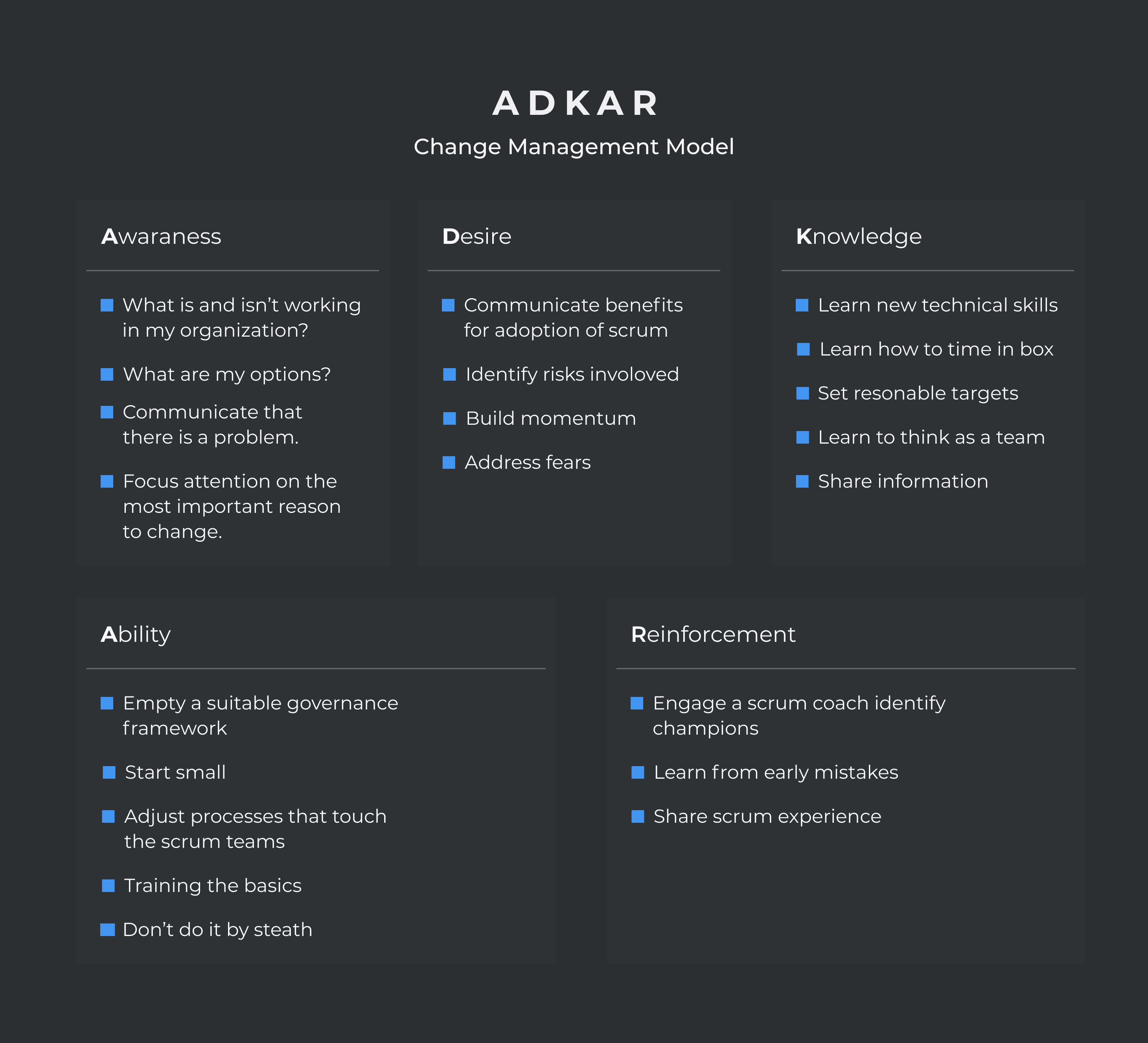
Awareness - make sure all employees are aware of the problem. Desire - involves stimulating the use of benefits. Knowledge - knowledge of how to create and maintain changes. Ability - the ability to work to close skill gaps that limit change. Reinforcement- measure victories and reward them.
Also, focus on continuous training as it provides continuous improvement for different user groups. Depending on the structure of the organization and your needs, you can choose different types of training, for example:
- Conduct a seminar in a relaxed atmosphere. Collaborative user training in an informal setting is quite effective.
- Hold an Open Day. This format allows you to brainstorm, communicate, and share success stories, and develop solutions to problems together.
- Coaching. During this event, experienced users share their experiences and talk about how this software has increased their effectiveness.
- Self Education. This format assumes that users use training materials provided by the vendor and various free reference guides and webinars to improve their knowledge and skills.
Bottom Line The process of implementing new software is long, so it may take some time to get comfortable with the new system. Prioritize the areas that need to be mastered first, ensure excellent communication between IT leaders and implementation teams, focus on initial staff training, and provide additional training opportunities. Using the planning steps outlined will help you make software implementation planning as effective as possible.
Contact Yojji if you’re interested to learn more or if you’re looking for a trusted partner to make your software dream a reality!
Looking to hire developers?