Mastering Your MVP: Prioritizing the Main MVP Features



Choose MVP Features Wisely with Yojji
Creating a Minimum Viable Product (MVP) can be quite difficult and tedious at times. The key features of a product should, therefore, be both interesting and useful for consumers. This article will explain the selection of core features for your MVP and how to develop MVP wisely. Additionally, we will provide you with best practices and the do's and don'ts of what should be prioritized during MVP development.
MVP vs. POC: Understanding the Difference
Although PoC and MVP are frequently used interchangeably, they have different functions in the product development environment. The MVP offers value to its users because it is the smallest product that can be introduced to the market. Addressing one or two issues that are important to its target audience, the MVP concentrates on the most important aspects. It is used to gauge interest in releasing new products and solicit input from early adopters, which will be incorporated into further iterations of the product development process.

With diverse experience in MVP and PoC building, our team can provide you with top-notch expertise regardless of your industry. No matter if you want to conquer Edtech, healthcare, or the EdTech sphere, we provide custom-made solutions to ensure you build a successful product and scale with ease.

Conversely, a proof of concept is an early demonstration of the viability and potential of the product. It can be created for a certain technology or concept and demonstrated to investors, stakeholders, or prospective customers. In contrast to an MVP, a proof of concept may just present one feature or capability rather than a working product. An MVP adds value for end users and aims for market adoption, while a proof of concept can be used to validate a single technology or idea.
Why Is Choosing Features for an MVP Tricky?
For any product, choosing MVP features can be very difficult. Considerations such as user demand, feasibility, and the type of experience it offers must be taken into account.
Strategies for Prioritizing Features in Your MVP
Here are some suggestions for your MVP's feature prioritization.
User Wants vs. User Needs
User requirements are essential features that address a user's issue, while user desires are extras that add flair to the experience.
Finding the obstacles, issues, and requirements of the potential users should be the goal of the user research and feedback. Building a product that fits and provides significant value to your target clients can be facilitated by giving priority to features that answer a need. Just as importantly, prioritizing user needs will increase the product's "desirability" and help set it apart from rival products.
Feature Value to the Number of Users
The likelihood of a valued, appealing product becoming available in the public domain increases when attention is paid to aspects that benefit the greatest number of consumers. These features may be standard elements of the product or customized suggestions for a user.
Third-Party Services
You can gain a lot of flexibility by incorporating third-party services into your minimal viable product from the beginning. The market offers a wide range of sophisticated services that improve your MVP. For example, if your product supports payment processing, you can integrate it with a well-known payment gateway provider to streamline the user experience. Several other available communication services expand the features of your product to include push alerts or real-time messaging.
Focusing on essential features results in a higher-quality MVP in less time. Plus, you don't have to start from scratch and can use solutions that have been tested and proven to work. When deciding which third-party services to incorporate into your MVP, you must use extreme caution. Naturally, the service provider's reputation, scalability, and dependability must be assured. You must also make sure that the services align with the long-term goals and vision of your product.

Conduct Competition Analysis
Focus primarily on features distinguishing your product and those essential for competition with other firms. This way, you create a product that fulfills customer requirements and stands out in an extremely competitive market.
Stay Flexible
Being flexible allows a product to take advantage of fresh insights and construct the greatest MVP possible. This enables the prioritization of those essential elements that address the users' real needs and desires.
Beta testing and early adopter feedback could confirm or invalidate some of the initial hypotheses, or certain features may not appeal to the intended audience. This must be accepted as a chance for development and progress since it is typical in the MVP process.
MVP Feature Prioritization Models
These models will help you prioritize your MVP features.
Kano Model Technique
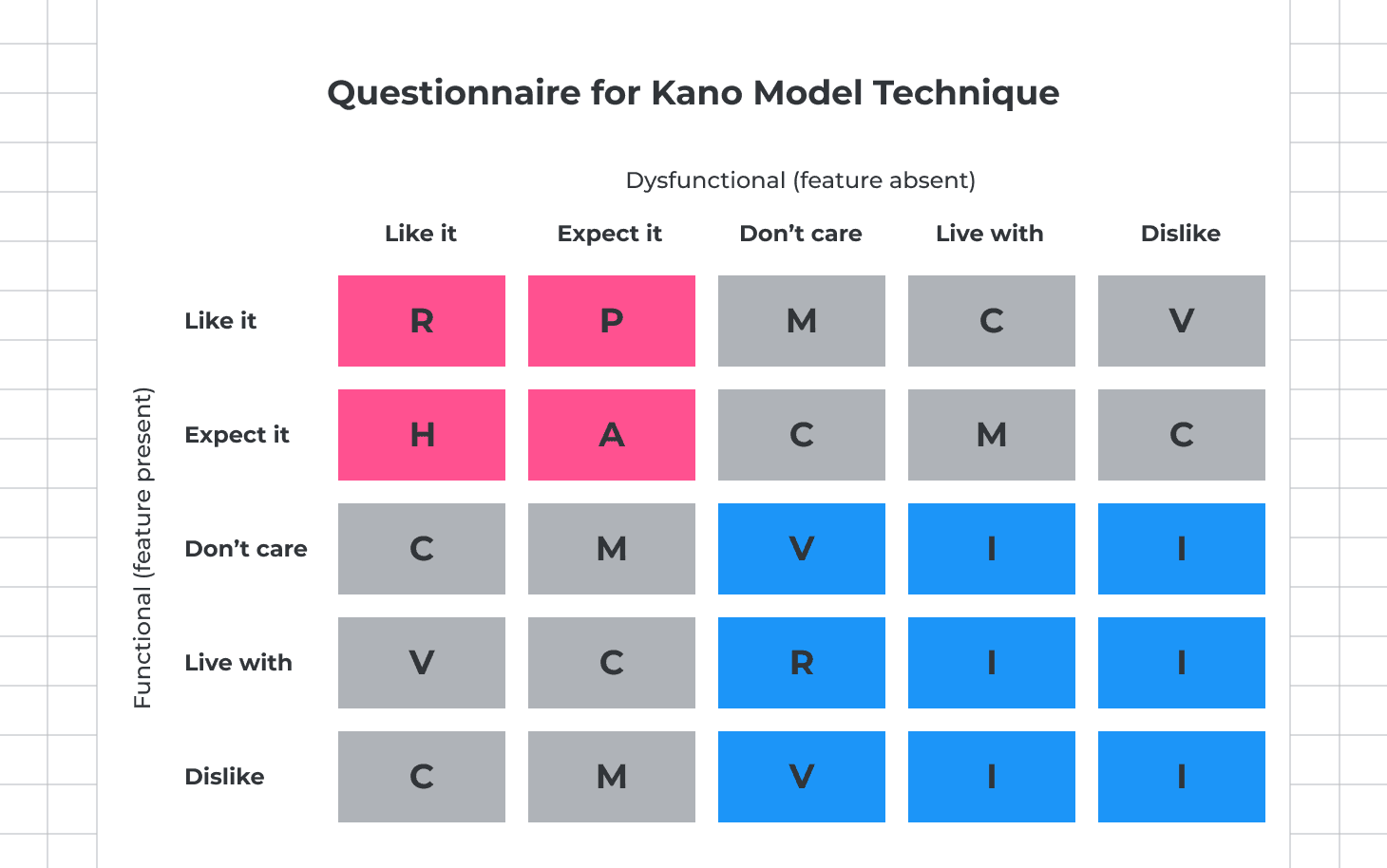
Kano's model divides features into three categories: excitement needs, performance needs, and basic needs. The fundamentals are things that buyers naturally expect, such as having a working product. Performance needs, such as speedier processing, are enhancements that add value but are not frequently anticipated. Excitement features are added elements that leave clients speechless. Start with must-haves, then add performance, and lastly, think about using delighters to differentiate your product and provide your customers with an amazing experience.
Bubble Sort Technique
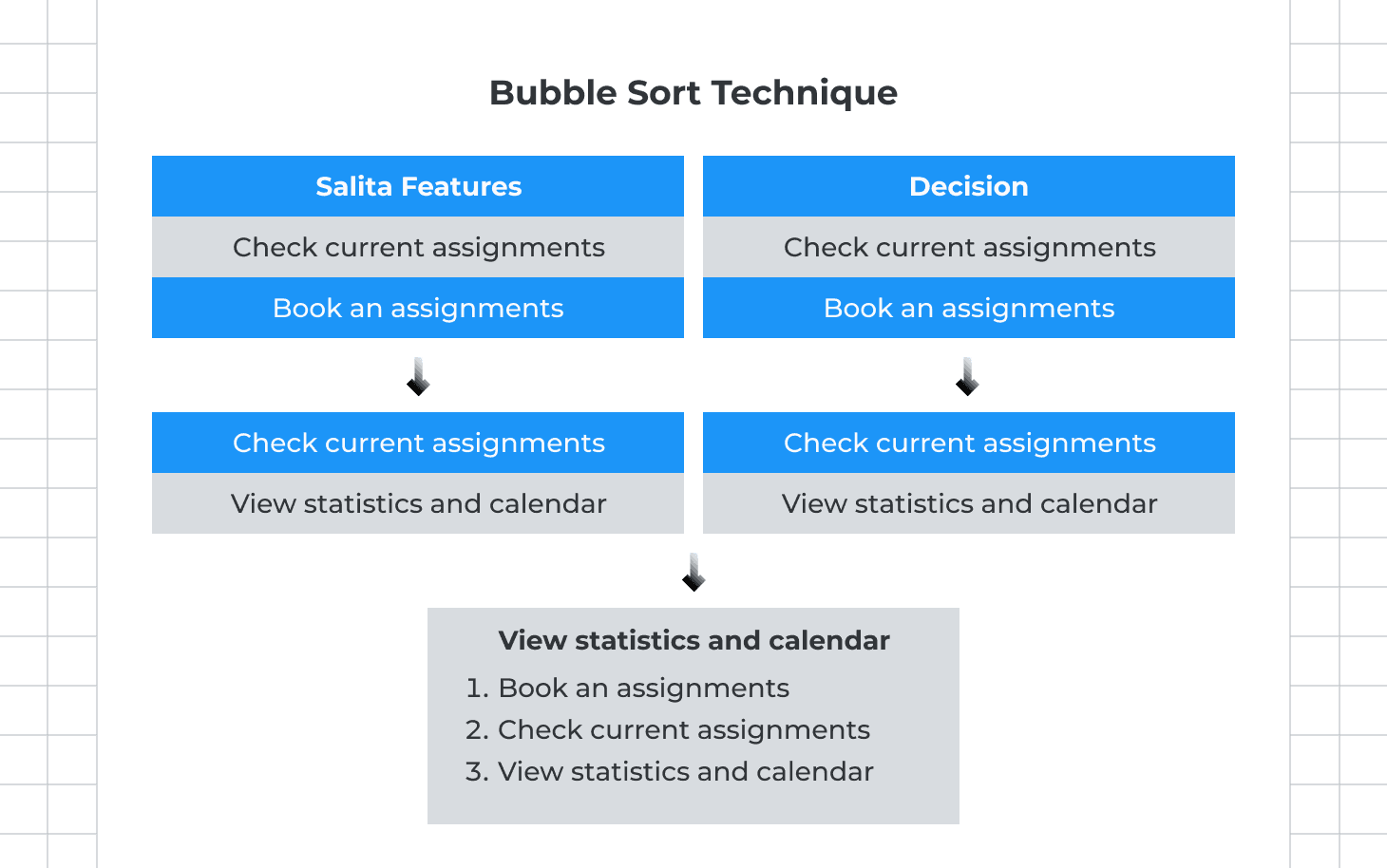
Bubble sorting is a method that compares each feature individually with its associated significance and effect on the success of the product. This approach begins by listing all of the MVP's features. Each feature is then ranked according to its importance, and they are all compared to one another. Compare the first two features first, then determine which is more valuable. Do so until all of the features are ranked appropriately, repeat this process for each feature, switching their ranks frequently. This method works well because it carefully considers every aspect, giving priority to those that are most important.
MoSCow Matrix
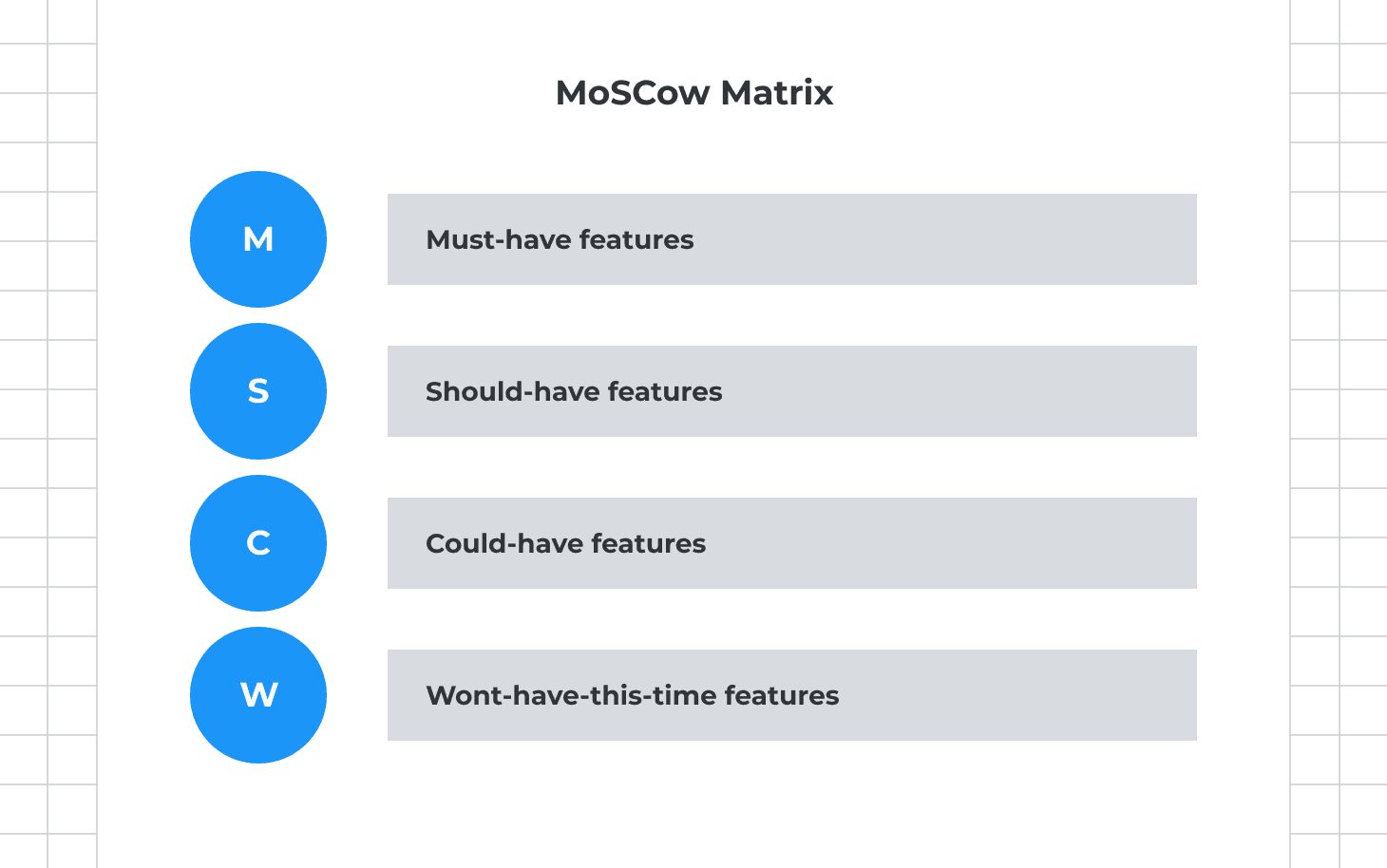
The Moscow Model categorizes features into four main groups: Must-haves, Should-haves, Could-haves, and Won’t-haves. Must-haves are the essential features that are necessary for your product to function properly. These are non-negotiable and should be developed and implemented first. Should-haves are the features that are important but not critical for the initial release. These can be included in the MVP but can also be postponed to later iterations. Could-haves are the nice-to-have features that are not essential for the core functionality. These features can be added if time and resources permit. Lastly, Won’t-haves are the features that are deliberately left out of the MVP. These may be less important or may require significant time and resources to develop. They can be considered for future updates or releases but are not part of the initial scope.
Yojji Expertise
Yojji has built MVPs for startups in a variety of markets, including FinTech, healthcare, and education. Our specialists ensure your MVP has the necessary features. We offer a free consultation for you to learn more about our services and ask all the questions you have regarding your project.
Bottom Line
Setting priority for your MVP's essential features and functions is crucial to its success. Sure, at the beginning, it limits the services you provide to your users, yet preserves valuable time and funds you have meticulously set aside for your staff. Keep in mind that MVP refers to something you plan to test, get feedback on, and then refine. Setting priorities for the "main features" categories enables you to get early feedback from the most valuable users, which you can utilize to modify your product's development roadmap later on. Yojji can handle this process for you and make sure your MVP functions its best. Get a free consultation to learn more about cooperation with Yojji.
Looking to hire developers?